
Last reviewed: November 2026
Quick answer: DIY jobsite security cameras suit small, short projects where low-value material is on site and someone can reliably check alerts at night. Monitored construction site security cameras make more sense for larger or longer projects, sites with copper, fuel or heavy equipment, and any site where nobody can realistically watch the phone at 2 a.m.
Key takeaways
- The real difference is not the camera but who watches it and what they do when something happens.
- DIY systems record well but depend on you noticing an alert, judging it and acting in time.
- Research on CCTV found larger effects when systems are actively monitored than when they only record.
- Site size, project length, what is stored on site and who is available at night should drive the decision.
- Either way, good placement, lighting and a tidy perimeter make cameras more useful.
What is the difference between monitored and DIY jobsite cameras?
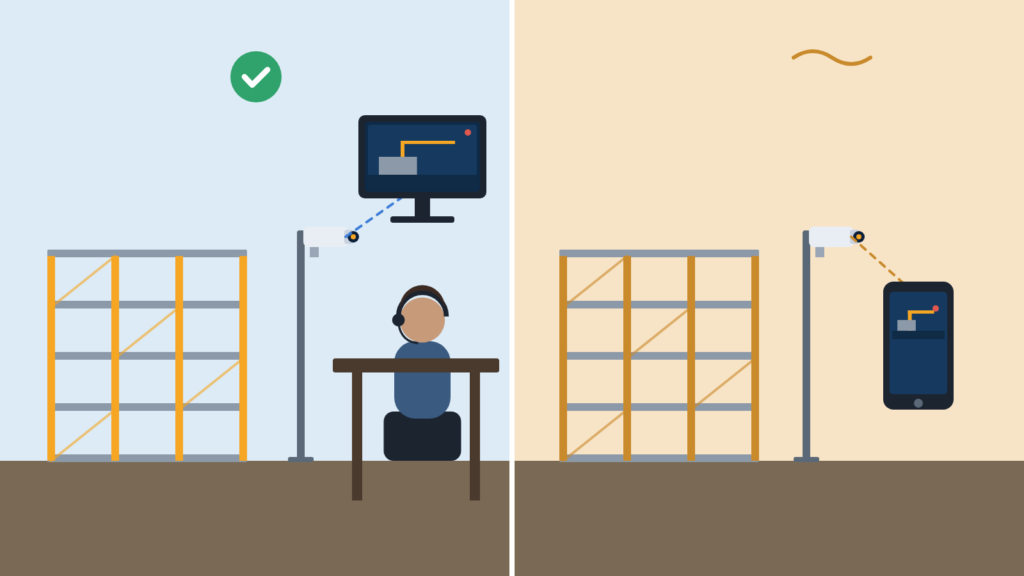
The difference is who responds. With DIY cameras, you buy or rent the cameras, receive motion alerts on your phone and decide what to do. With monitored cameras, trained operators review alerts as they arrive, verify what is happening on live video and follow an agreed plan, such as issuing a warning or calling police and your contacts.
Both setups can use similar hardware, including solar or cellular camera towers. Recording quality, storage and remote viewing are often comparable. What changes is whether a person is actively looking when an alert fires.
What does the research say about watching cameras live?
Research suggests that active monitoring matters. A 2019 systematic review and meta-analysis by Piza, Welsh, Farrington and Thomas, covering decades of CCTV evaluations, found a significant but modest overall drop in crime linked to CCTV. It also found that schemes with active monitoring had larger effects than passive systems, and that CCTV combined with other measures did better than CCTV used alone.
The ASU Center for Problem-Oriented Policing guide on burglary at house construction sites (2006) reaches a similar practical point: CCTV works best when there are enough cameras to cover an area and when access points are limited and controlled. It also warns that alarms need to be managed to avoid false alarms that waste police time, which is relevant if you plan to call police from your own phone alerts.
When does a DIY camera setup make sense?
A DIY setup makes sense when the stakes are low and you have a reliable person to respond. It tends to fit:
- Small sites, such as a single-home remodel or short repair job.
- Short projects of a few weeks where little valuable material stays overnight.
- Sites where tools and materials go home with the crew each night.
- Owners or supervisors who live nearby and will actually check every alert.
- Budgets where the main goal is recording evidence for police and insurance.
The weak point is human. Motion alerts come at all hours, many are wind, animals or headlights, and it is easy to start ignoring them. If you go DIY, set clear detection zones, decide in advance who answers alerts on which nights, and test the process.
When are monitored cameras the better choice?
Monitored cameras are usually the better choice when losses would be expensive or disruptive and nobody on your team can watch overnight. They tend to fit:
- Larger sites with several buildings, laydown areas or long fence lines.
- Projects that run for months, especially through holidays and winter shutdowns.
- Sites storing copper, fuel, tools or heavy equipment.
- General contractors running several sites at once.
- Sites with a history of break-ins, or in areas where theft is common.
A monitoring service also adds process: a written response plan, a record of every action taken and incident reports you can share with project owners and insurers.
How do monitored and DIY cameras compare?
The table below is a fair, general comparison. Real costs and features vary by provider and site.
| Factor | DIY cameras | Monitored cameras |
|---|---|---|
| Who watches | You or your staff, when you can | Trained operators during agreed hours |
| Alert handling | Phone notifications you must judge | Alerts verified on live video |
| Response during an event | Depends on someone being awake and available | Warning, police call and contacts per a written plan |
| False alerts | You sort them yourself | Operators filter them before anyone is called |
| Records | Footage you export | Time-stamped incident reports with clips |
| Best fit | Small, short, low-value jobs | Larger, longer or higher-risk projects |
| Main limitation | Relies on attention at night | Ongoing service cost; needs good coverage |
How do site size and project length change the answer?
Site size and project length change how much exposure you carry. A simple way to think about it:
- Short and small (a few weeks, one structure): DIY can work if material leaves with the crew and someone owns the alerts.
- Medium (a few months, materials stored on site): consider monitored coverage for nights and weekends, at least during phases when copper, appliances or equipment are on site.
- Large or long (multi-building or many months): monitored coverage is usually easier to justify, because a single bad night can mean replacement costs, insurance deductibles and schedule delays. Weigh those against the ongoing cost of the service for your own project.
Whatever you choose, review the decision when the project changes. A site that was low-risk during excavation can become a target once wire, fixtures and finished units arrive.
What makes any jobsite camera setup work better?
Any camera setup works better when the site is designed for it. Light the gates, storage areas and building entrances; keep gates to a minimum; place cameras where people approach, not just where material sits; and protect power and connectivity to the cameras. For more steps, see our guide on stopping construction site theft at night and our comparison of monitored and unmonitored cameras.
Frequently asked questions about monitored vs DIY jobsite cameras
Can I start DIY and switch to monitoring later?
Often, yes. Many IP cameras can be connected to a monitoring service later, so check compatibility before you buy hardware.
Do monitored cameras stop every theft?
No. Monitoring gives someone a chance to respond while an intruder is still on site, but it cannot prevent every incident or control how fast police arrive.
Should I call police directly from DIY alerts?
Call 911 if you see a crime in progress or anyone in danger. Police policies on unverified alarms vary by area, so check with your local department about how they handle reports.
What hours should a construction site be monitored?
Most sites focus on the time from the last crew out to the first crew in, plus weekends and holidays. Match hours to when the site is empty.
Getting started with monitored jobsite cameras
If you are weighing the options, Strixon offers remote video monitoring for construction sites. Trained operators verify alerts on your cameras, can give voice-down warnings through on-site speakers, and call police and your contacts according to a written response plan. Many existing IP cameras can connect after a free compatibility check. Try it with a free 14-day trial or email contact@strixonwatch.com.
Sources
- Piza, Welsh, Farrington and Thomas, Criminology & Public Policy: CCTV surveillance for crime prevention: A 40-year systematic review with meta-analysis (2019)
- ASU Center for Problem-Oriented Policing: Burglary at Single-Family House Construction Sites, Guide No. 43 (2006)