
Last reviewed: November 2026
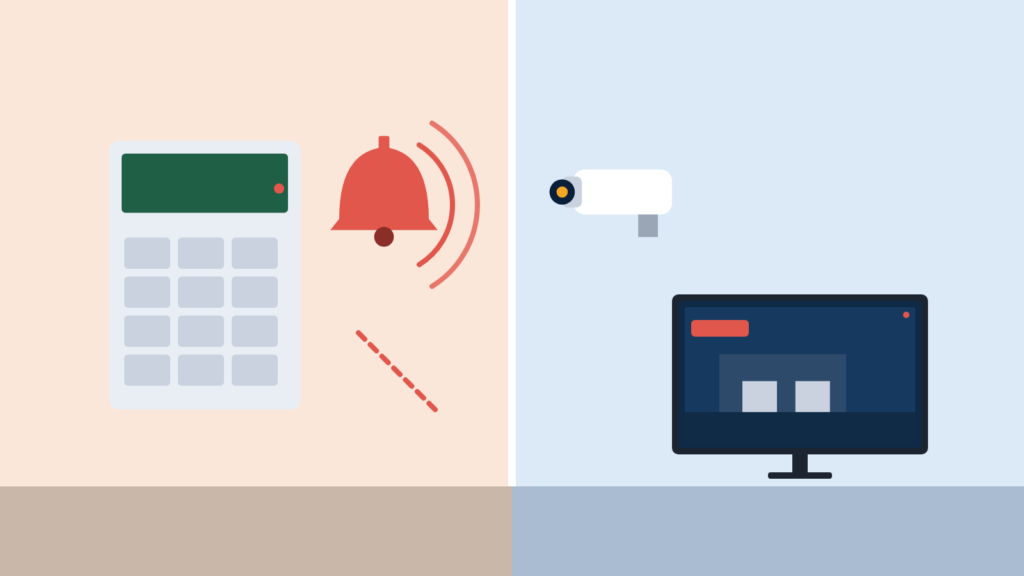
Quick answer: The core difference in alarm monitoring vs video monitoring is what the monitoring center can see. Alarm monitoring reacts to sensor signals, such as a door contact or motion detector, and usually cannot confirm what caused them. Live video monitoring lets a trained operator watch your cameras, check what is happening and respond. Many sites get the best results by using both together.
Key takeaways
- Alarm monitoring tells a monitoring center that a sensor tripped. It rarely shows why.
- Live video monitoring adds a person who can look, judge and respond while an event is still happening.
- Police research has long found that most burglar alarm calls are false, which is why some cities now ask for verification before they send officers.
- Alarm monitoring often suits closed buildings with clear entry points. Video monitoring suits open yards, lots, jobsites and building exteriors.
- Rules on alarm permits, police response, audio warnings and recording vary by location, so check what applies to your site.
What is alarm monitoring?
Alarm monitoring is a service in which sensors at your property send a signal to a monitoring center when they trip, and an operator follows a call list you agreed in advance. Common sensors include door and window contacts, interior motion detectors, glass-break sensors and panic buttons. When the system is armed and a sensor trips, the control panel sends a signal that identifies the zone, such as “rear door” or “warehouse motion.”
The operator then usually tries to reach a keyholder and, depending on your instructions and local rules, may ask police to respond. Alarm monitoring is mature, widely available and good at covering the inside of a building with defined entry points. Its main limit is that the signal says which sensor tripped, not who or what tripped it. A loose door, a pet, a balloon drifting past a motion sensor and a real intruder can all look the same at the monitoring center.
What is live video monitoring?
Live video monitoring is a service in which trained operators watch your security cameras in real time and respond to what they see. In most setups, video analytics flag movement, and an operator opens the live feed to decide whether it is an employee, a visitor, an animal or an intruder.
If the operator sees someone who should not be there, they can act while the person is still on site. At Strixon, for example, operators can give a live voice-down warning through on-site speakers, call police and your contacts according to a written response plan, and send a time-stamped incident report with video clips afterward. You can see how the pieces fit together on our services page.
Because cameras can watch open ground, video monitoring can cover places where alarm sensors are hard to use, such as car lots, fence lines, equipment yards and active construction sites.
Why does alarm verification matter so much?
Verification matters because most unverified burglar alarms turn out to be false, and many police agencies have changed how they respond as a result. A 2007 guide for police from the Center for Problem-Oriented Policing reported that between 94 and 98 percent of alarm calls were false, and that false alarms made up somewhere between 10 and 25 percent of all calls to police nationwide. The same guide pointed to three main causes: user mistakes, faulty or poorly chosen equipment, and poor installation.
Some cities now respond only to burglar alarms that have been verified. The Fontana, California, police policy on verified alarms (2023) is one example. It lists accepted verification methods, including on-site verification, remote audio or video monitored by the alarm company, and multiple sensor activations within set time limits.
The industry has also worked on shared language for describing alarms. The Monitoring Association’s ANSI/TMA-AVS-01 alarm validation standard (2024) scores alarms from Level 0, no call for service, up to Level 4, a confirmed threat to life. Not every agency uses this scale, and policies differ widely from one city to the next. Verification can give police better information, but it does not control whether or how fast officers arrive. Check with your local police department or city alarm office to learn what applies to your site.
How do alarm monitoring and video monitoring compare?
Alarm monitoring and video monitoring differ mainly in what triggers them, what the operator knows and where they work best. The table below is a general comparison. Individual services and setups vary.
| Factor | Alarm monitoring | Live video monitoring |
|---|---|---|
| What starts an alert | A sensor signal, such as a door contact or motion detector | Camera analytics flag movement, then an operator reviews the live view |
| What the operator knows | Which zone tripped | Who is there, what they are doing and where they are moving |
| Best coverage area | Enclosed buildings with defined entry points | Open lots, yards, fence lines, jobsites and building exteriors |
| Timing of response | Usually after a door, window or interior sensor trips | Can begin when a person is seen near the perimeter |
| Handling false alarms | Often relies on reaching a keyholder to confirm | Operator checks the cameras before escalating |
| Records | Signal log with times and zones | Event log plus video clips |
| Main limits | No visual context | Depends on camera coverage, lighting and a reliable internet connection |
When does alarm monitoring make the most sense?
Alarm monitoring makes the most sense when what you protect sits inside a secure building with a small number of entry points. Typical examples include:
- Offices and shops that are fully closed and locked at night.
- Interior rooms where cameras are not practical or not appropriate.
- Panic or hold-up buttons that staff need during business hours.
- Fire alarm systems, which are usually governed by separate fire codes and should stay monitored as your local authority requires. Video monitoring is not a substitute.
When does live video monitoring make the most sense?
Live video monitoring makes the most sense when the property is open to the outside, valuable items sit in the open, or you want someone to act before a break-in happens. It is a strong fit for:
- Car lots, equipment yards, storage yards and construction sites with materials in the open.
- Sites where wind, animals or headlights keep setting off alarms.
- Large perimeters where an intruder can be spotted at the fence before reaching anything valuable.
- Owners and managers who want a written record with clips for insurers or police.
- Areas where local police ask for verification before they respond to a burglar alarm.
Should you use alarm monitoring and video monitoring together?
Many sites should use both, because they cover different gaps. The alarm protects the inside of the building, and the cameras let an operator confirm what caused an alarm before anyone is called. This is often called alarm verification. To decide what your site needs, work through these steps:
- List what you are protecting. Note where vehicles, equipment, stock and entry points are.
- Map your current coverage. Mark each sensor and each camera view, and look for gaps.
- Check local rules. Ask your city or police department about alarm permits, false alarm fees and verification requirements.
- Decide who responds after hours. Name the people to call, in order, and what each should do.
- Write a response plan. Spell out when to warn, when to call police and when simply to log an event.
- Test after dark. Check that cameras can see clearly at night and that alarms reach the right people.
For a broader introduction, read What Is Remote Video Monitoring? How It Helps Businesses Reduce Risk.
Frequently asked questions about alarm monitoring vs video monitoring
Is video monitoring the same as having security cameras?
No. Cameras on their own record what happens. Live video monitoring means a trained person watches the cameras during set hours and responds to what they see.
Does video verification guarantee a police response?
No. Police decide how and when to respond, based on their own policies and workload. Verification gives them better information, but no monitoring service controls police response times.
Can I add video monitoring to an existing alarm system?
Often, yes. It depends on whether your alarm system can send events to the monitoring company and whether your cameras are compatible. Many existing IP cameras can connect after a free compatibility check with Strixon.
Does video monitoring replace a fire alarm?
No. Fire alarm systems follow their own codes and monitoring requirements. Keep them in place and monitored as your local fire authority requires.
Are live voice warnings allowed everywhere?
Rules on audio, signage and recording vary by state, province and city. Check what applies locally before adding speakers or audio to your site.
See live video monitoring on your own site
Strixon is a remote video monitoring company. Our trained operators verify alerts on your cameras, can warn intruders through on-site speakers, and call police and your contacts according to your written response plan. You get time-stamped incident reports with clips. To see whether it fits your site, start a free 14-day trial or email contact@strixonwatch.com.
Sources
- Center for Problem-Oriented Policing (Rana Sampson), False Burglar Alarms, 2nd Edition, 2007.
- Fontana Police Department, Policy 470: Verified Alarm, 2023.
- The Monitoring Association, ANSI/TMA-AVS-01 Alarm Validation Scoring Standard, 2024.